
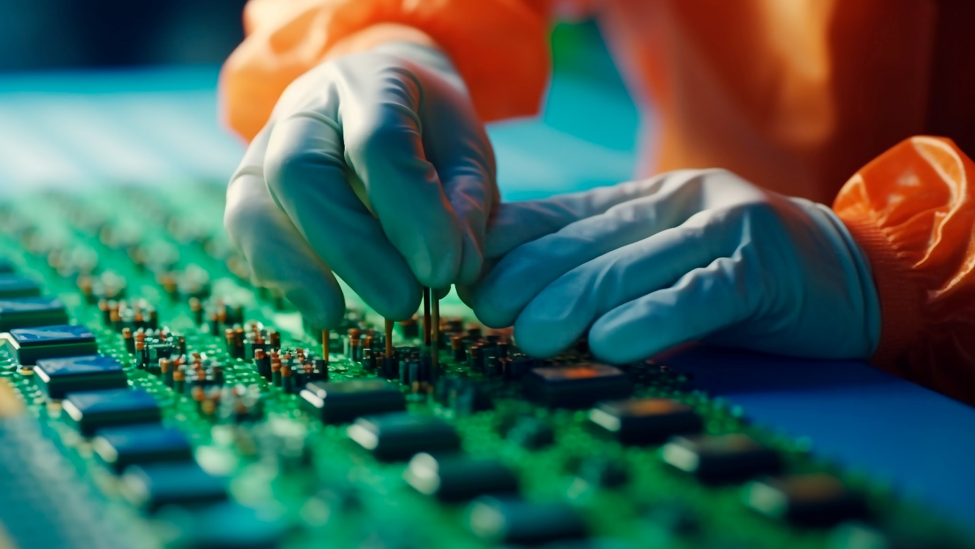
Contract electronic manufacturers or CEMs are vital as they offer technology brands specialized production knowledge, supply chain management and flexible assembly lines. Without investing time or money in manufacturing, a hardware vendor can concentrate solely on research, design and marketing and save on overheads, whilst at the same time speeding up their overall time-to-market.
Intense capital investment, highly specialized equipment and deep expertise are needed to create the hardware for buildings. A crucial choice for a technology company developing a new device is when it reaches a growth stage. They have to make a decision on how to manufacture their products either in their own factories or have manufacturing specialists to produce their products.
It’s where contract electronics manufacturers come in. A contract electronics manufacturer is a third-party company that physically produces electronic products. From sourcing of raw materials to printing circuit boards, to building the finished product and quality tests, these companies do it all.
It’s important for any hardware brand to grasp the significance of these manufacturing partnerships. In this post, you’ll discover what contract electronics manufacturers are, how they can safeguard your bottom-line and why outsourcing production is the smartest move for today’s technology firms.
What is the value of contract electronics manufacturers to tech companies?
Contract electronics manufacturers are key to bridging the gap between a working prototype and mass market distribution for technology companies. Operating a manufactory requires constant supervision, maintenance of equipment and supervision of the workers. This physical production delegation will enable the original equipment brand to stay agile and focused on innovation.
What are contract electronics manufacturers looking to do to lower production costs?
The initial start-up costs for establishing an independent plant are in the millions of dollars. Automated soldering machines, assembly robots and testing machinery have to be bought by companies before a single product is sold.
No other barrier to entry is completely eliminated by outsourcing electronics manufacturing to a contract electronics manufacturer. A contract electronics manufacturer operates multiple facilities and equipment, which translates to a large amount of production, thus sharing the cost of the facilities and equipment amongst many clients. This common infrastructure gives significant economies of scale. Moreover, contract electronics manufacturers buy electronic components and raw materials in huge numbers. This buying power enables them to secure reduced prices from component manufacturers and passes on the resulting material cost reduction to the technology brands they supply. If you are not so focused on owning your own actual factory, then you should select a contract electronics manufacturer.
What does outsourcing do to speed up time to market with electronic devices?
The speed of the consumer electronics business is important. Products can be late in the market, depriving the company of its market share and obsolete technology. Contract electronics manufacturers help to speed the production process by providing the needed highly optimized assembly lines.
Once a technology brand has completed a product design, a contract electronics manufacturer can begin manufacturing that product right away. Each of these manufacturers has a dedicated production engineer to look for bottlenecks in the assembly process and improve the flow of production. A technology firm isn’t forced to spend a year designing and staffing a new plant, but can go from the final prototype to retail shelves in weeks by leveraging an existing contract electronics manufacturer.
How are CEMs involved in supply chain and quality control?
Buying electronic parts is a very complicated process. International supply chains are subject to variations related to material shortages, geopolitical events and shipping delays. Contract electronics manufacturers have dedicated procurement teams and approved supplier networks that can help them overcome these challenges.
In case one particular microchip becomes unobtainable, a contract electronics manufacturer will be able to locate verified alternatives from its worldwide network of suppliers. Those manufacturers don’t only focus on procurement, but also have a very strict quality control. They employ automated optical inspection and various functional testing for each single product, guaranteeing that each and every one of them works properly before it exits the factory. This degree of professional quality assurance means that product returns are kept to a minimum and the technology’s image is safeguarded.
The Next Steps for Electronic Brands
Contract electronics manufacturers are the unseen backbone behind the modern hardware industry. They provide the knowledge, size and quality assurance that is required to make those bold technical designs a solid consumer product.
As electronic devices become more advanced, the need between the hardware designers and external manufacturers will only grow. Scale-up firms should start identifying current bottlenecks in their supply chains and look into contract manufacturers specializing in their product type.
Frequently Asked Questions
What is the difference between CEM and OEM?
Original Equipment Manufacturer (OEM) is the company that designs and brands the product, and then sells it to the consumer. A Contract Electronics Manufacturer (CEM) is the third-party company that a company that is hired by the OEM to actually manufacture and assemble the electronic device.
What’s the price of a CEM?
The price range of hiring a contract electronics manufacturer is vast and depends on the production volume, complexity of the devices and testing needs. In addition to initial tooling and production line setup costs, a per unit assembly cost is usually required by manufacturers.
What are the main risks of using a CEM?
The main pitfalls of using a contract electronics manufacturer are the potential theft and loss of intellectual property, no direct control over the daily assembly process and communication issues due to different time zones.
What makes you select the right CEM for your project?
Look for a contract electronics manufacturer like Optima Technology that has experience in producing such electronic goods, has quality certifications (such as ISO 9001), and possesses the ability to expand production as your product demand grows.

