
Introduction
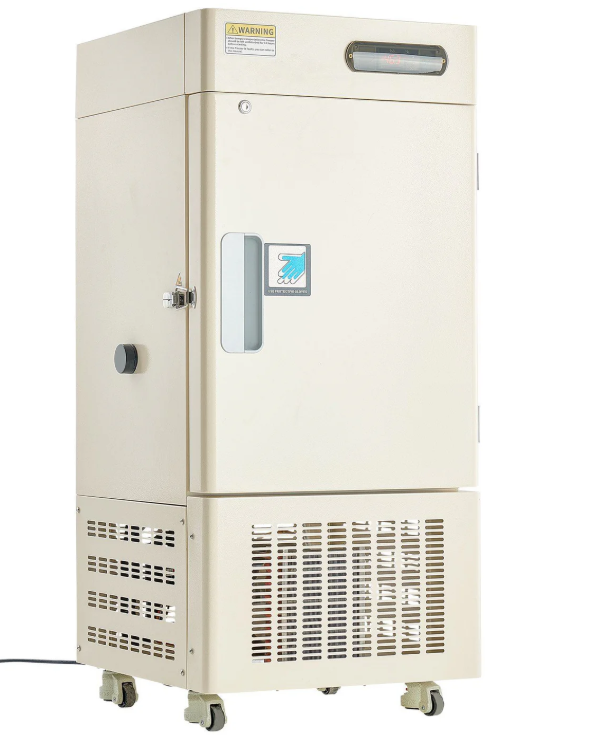
Across American research laboratories, medical facilities, and pharmaceutical companies, preserving sensitive biological samples requires extremely low temperatures. Standard freezers cannot reach the temperatures needed for long-term sample viability. A low temperature lab freezer provides ultra-cold storage down to minus 123 degrees Fahrenheit. American scientists, medical researchers, and laboratory managers use these freezers to store vaccines, enzymes, cell cultures, and other temperature-sensitive materials.
Operating Principles and Temperature Range
The freezer uses a high-efficiency single-stage compressor to achieve ultra-low temperatures. The digital control system monitors interior temperature continuously. Users can set any temperature between minus 40 degrees Fahrenheit and minus 123 degrees Fahrenheit. The microcomputer maintains temperature within plus or minus 0.1 degrees Celsius of the set point.
This precision is essential for biological samples. Temperature fluctuations can degrade proteins, inactivate enzymes, or cause freeze-thaw damage to cell cultures. The freezer’s stability preserves sample integrity over months or years of storage.
Sample Protection and Alarm Systems
Sample loss from equipment failure is a significant risk in research. The freezer includes multiple safety features. Audible and visual alarms activate if the interior temperature exceeds user-set limits. A keyed lock prevents unauthorized access. The digital display shows current temperature and any alarm conditions.
Key safety features include:
- Audible and visual temperature alarms
- User-adjustable alarm limits
- Keyed lock for physical security
- Digital temperature display
- 304 stainless steel interior for cleanability
Compact Design and Laboratory Applications
The 28 liter capacity fits in crowded laboratory spaces. The upright design measures 21.7 inches wide by 21.7 inches deep by 45.1 inches high. The stainless steel interior resists disinfectants and is easy to clean, reducing contamination risk.
Common applications include:
- Vaccine and pharmaceutical storage
- Enzyme and protein preservation
- Cell culture and tissue sample storage
- Research sample archiving
- Biotech and diagnostic laboratory use
Energy Efficiency and Operational Considerations
The single-stage compressor design consumes less energy than cascade systems used in some ultra-low freezers. The 450 watt power consumption is moderate for the temperature range. The unit operates on standard 110 to 120 volt outlets, unlike some larger freezers that require 208 to 240 volt circuits.
Proper location is important. The freezer requires clearance around the compressor for ventilation. Ambient temperature affects cooling efficiency; locating the unit in an air-conditioned room improves performance and extends compressor life.
Safety Practices and Operational Guidelines
Safe freezer operation requires several key practices:
- Allow unit to stabilize for 24 hours before loading samples
- Organize samples for quick access to minimize door openings
- Use appropriate cryogenic gloves when handling materials
- Clean door seals regularly to prevent ice buildup
- Monitor temperature logs daily for trends
Proper monitoring and compliance tracking is also important in research labs handling sensitive samples. Many facilities now use lab safety software to manage safety procedures, equipment records, and compliance in one place.
Advantages and Limitations
Advantages of a low temperature lab freezer include:
- Temperature range down to minus 123 degrees Fahrenheit
- Plus or minus 0.1 degree Celsius temperature stability
- Audible and visual alarms for sample protection
- Keyed lock for security
- Compact footprint for crowded labs
- 304 stainless steel interior for durability
Limitations to consider:
- 28 liter capacity is smaller than upright freezers
- Not for storage of flammable materials
- Requires dedicated electrical circuit for best performance
- Weight of 132 pounds requires two people for moving
- Regular cleaning of door seals required
Real-World Application Example
An American university research laboratory studied heat-shock proteins in cell cultures. Samples were previously stored in a standard freezer at minus 4 degrees Fahrenheit, where proteins degraded within weeks. The lab purchased an ultra-low temperature freezer set at minus 112 degrees Fahrenheit. Protein activity remained stable for six months, allowing extended experiments without sample loss.
Conclusion and Future Outlook
Low temperature lab freezers enable American research and medical facilities to preserve sensitive biological samples for extended periods. The combination of ultra-cold temperatures, precise control, and alarm systems makes these freezers essential for vaccine storage, biotech research, and diagnostic laboratories. Future designs may include remote monitoring via Wi-Fi and more energy-efficient compressors for lower operating costs.
Laboratory managers should evaluate ultra-low freezers for any facility storing temperature-sensitive biological materials. The minus 123 degrees Fahrenheit capability and 28 liter capacity make this freezer suitable for diverse American research and medical applications.

