
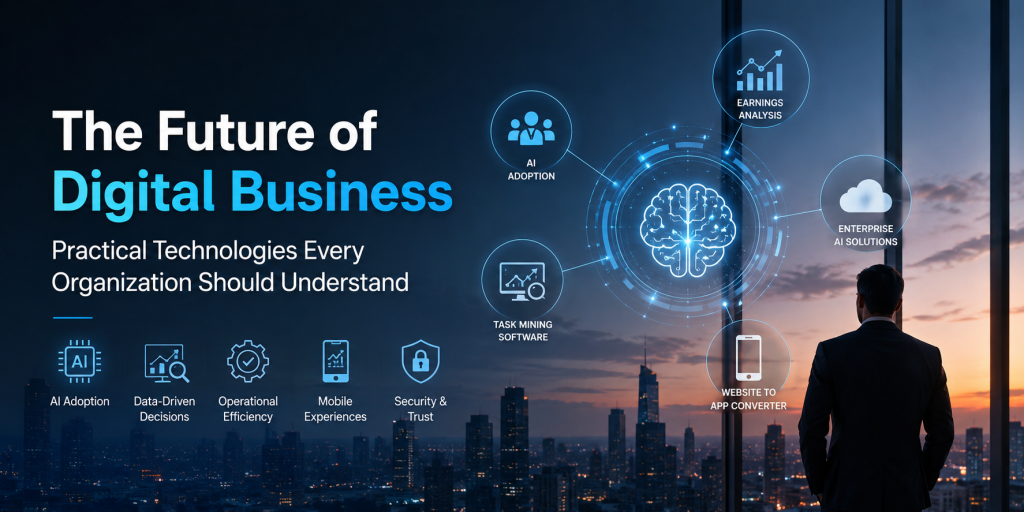
Digital transformation is no longer reserved for large enterprises with massive IT budgets. Businesses of every size are embracing new technologies to improve efficiency, strengthen customer relationships, and remain competitive in rapidly changing markets. As organizations collect more data and interact with customers across multiple digital channels, choosing the right technology becomes just as important as implementing it.
Rather than adopting every new trend, successful companies focus on technologies that solve real business problems. From improving operational workflows to delivering better mobile experiences, today’s innovations allow organizations to make smarter decisions while creating more value for customers.
A free logo maker online offers businesses an accessible way to create branding for websites, apps, and other digital platforms.
Why Digital Transformation Is About More Than Technology
Many people associate digital transformation with purchasing new software. In reality, it involves rethinking processes, improving collaboration, and using technology to eliminate unnecessary work.
Organizations that approach transformation strategically often experience:
- Faster decision-making
- Improved customer satisfaction
- Better operational visibility
- Increased productivity
- Stronger long-term scalability
The goal is not simply to digitize existing processes but to redesign them for greater efficiency.
Building a Data-Driven Organization
Modern businesses generate enormous amounts of information every day. Sales transactions, customer interactions, website traffic, support requests, and operational metrics all contribute valuable insights.
However, collecting data alone is not enough.
Companies that succeed are those capable of converting raw information into meaningful actions. They establish reliable reporting systems, define measurable objectives, and encourage departments to collaborate using shared performance indicators.
This approach enables leaders to identify opportunities earlier while responding more effectively to changing market conditions.
Understanding AI Adoption Across Industries
Many organizations are accelerating AI adoption as artificial intelligence becomes increasingly accessible through cloud platforms and business software. Instead of replacing employees, AI is often used to automate repetitive tasks, improve forecasting, enhance customer support, and generate valuable business insights.
Successful implementation usually starts with small pilot projects before expanding AI into more complex business operations. This gradual approach helps organizations measure results while reducing implementation risks.
Making Better Financial Decisions Through Data
Financial performance remains one of the most important indicators of organizational health. Modern businesses increasingly rely on advanced reporting tools to understand profitability beyond basic revenue figures.
Comprehensive earnings analysis allows decision-makers to evaluate operational efficiency, identify emerging trends, compare historical performance, and support future investment decisions. When financial insights are combined with operational metrics, organizations gain a clearer understanding of what truly drives sustainable growth.
Improving Operational Efficiency
Every organization contains processes that consume unnecessary time and resources. Identifying these inefficiencies can significantly improve productivity without increasing staffing levels.
One increasingly popular solution is task mining software, which analyzes how employees interact with business applications during daily work. Rather than relying solely on interviews or manual observation, these platforms reveal process bottlenecks through actual usage data.
The resulting insights help organizations automate repetitive activities, simplify workflows, and improve employee experiences while reducing operational costs.
Creating Smarter Business Systems
As organizations grow, disconnected software systems often create information silos. Sales, marketing, finance, customer service, and operations may each use different applications that struggle to communicate with one another.
Modern enterprise AI solutions help unify these environments by connecting data from multiple systems and providing intelligent recommendations across departments. These technologies assist employees by identifying patterns, predicting future outcomes, and supporting faster business decisions without replacing human expertise.
When integrated properly, AI-powered platforms improve collaboration while allowing leadership teams to respond more quickly to changing business conditions.
Meeting Customers Where They Are
Consumer behavior continues to shift toward mobile experiences. While responsive websites remain important, many customers prefer the convenience of dedicated mobile applications.
For businesses seeking a cost-effective way to expand their digital presence, a website to app converter can simplify the transition from an existing website into a mobile application without requiring a complete redevelopment project. This approach enables organizations to improve accessibility, increase customer engagement, and deliver app-based features while leveraging their existing web content.
As mobile usage continues to grow globally, providing customers with multiple access channels has become an important competitive advantage.
Cybersecurity Must Grow Alongside Innovation
Every digital initiative introduces new security considerations. Organizations investing in cloud services, automation, artificial intelligence, and mobile technologies should also strengthen their cybersecurity practices.
Important areas include:
- Multi-factor authentication
- Data encryption
- Regular software updates
- Employee security awareness
- Access control policies
- Continuous monitoring
Strong security practices protect both organizational assets and customer trust.
The Human Side of Digital Transformation
Technology alone does not guarantee success.
Employees need proper training, clear communication, and opportunities to adapt to changing workflows. Organizations that invest in continuous learning often experience smoother implementations and greater acceptance of new technologies.
Leadership also plays a critical role by encouraging innovation while maintaining realistic expectations regarding implementation timelines and measurable outcomes.
Preparing for the Next Decade
Emerging technologies will continue transforming how businesses operate. Artificial intelligence, cloud computing, advanced analytics, automation, and mobile platforms will become increasingly interconnected.
Organizations that remain flexible and continuously evaluate their digital strategies will be better positioned to adapt to evolving customer expectations and competitive markets.
Rather than chasing every new technology trend, successful businesses focus on practical solutions that improve efficiency, strengthen customer experiences, and support long-term growth. By making thoughtful technology investments today, companies can build stronger foundations for tomorrow’s opportunities.

